


Edge Group Scotland
Based in Musselburgh, Edge Group Scotland delivers specialist transition programmes for young adults who have learning disabilities, are autistic, and/or have other additional support needs (ASN) throughout the Lothians. Their programmes are flexible, person-centred, and built around real experiences that develop confidence, independence, and skills for life.
Edge Group Scotland is an accredited real Living Wage employer as well as being one of only a handful of social care services in Scotland that is a Living Hours employer. They employ around 15 staff, with diverse skills combining support expertise with skills in cooking, surfing, skiing, climbing, paddleboarding and more.
“We’re a bit unique – a lot of time people see social care as personal care, and that is just not what we do. ”
In recent years, Edge has transformed from delivering one to one care in the community, to a focus on premises-based day services. Edge continues to expand their service offer, recently announcing Edge Woods: an inclusive outdoor environment where young people can connect with the natural world. As a business, they credit their successes to being adaptable to both external pressures and opportunity. They note the benefits of being a small organisation in being light on their feet and able to adapt quicker to upcoming challenges, utilising staff, client and family feedback and input to shape next steps. Finance and Operations Director, David Myers observed, ‘We’re not very good at standing still – which is a strength and a challenge. It makes us unique’.
Edge Group Scotland is a real Living Wage employer and a Living Hours employer. The team acknowledges the positive impact that changes in their method of service delivery, to a day service, has made to morale and motivation. They have improved recruitment and retention, and reduced sickness absence, which is currently well below sector averages. They also reflected on the benefits of a day service in terms of more easily supporting some of the fair work principles. David reflected:
‘Had we looked at Living Hours a few years previously we would not have been able to get it across the line. We were doing one to one support in the community, and that makes it much more difficult to build in that stability. It would take weeks to get the rota done so you couldn’t get it published in the timescale. Bringing everything into our buildings means we know what our hours are and our staff know when they are going to be working. Everybody knows what they are doing’.
As well as practical improvements, Edge values the team being together in the day service, working from the same location, and being able to ask for ad hoc and informal support and input in a way that does not happen so organically over the phone.



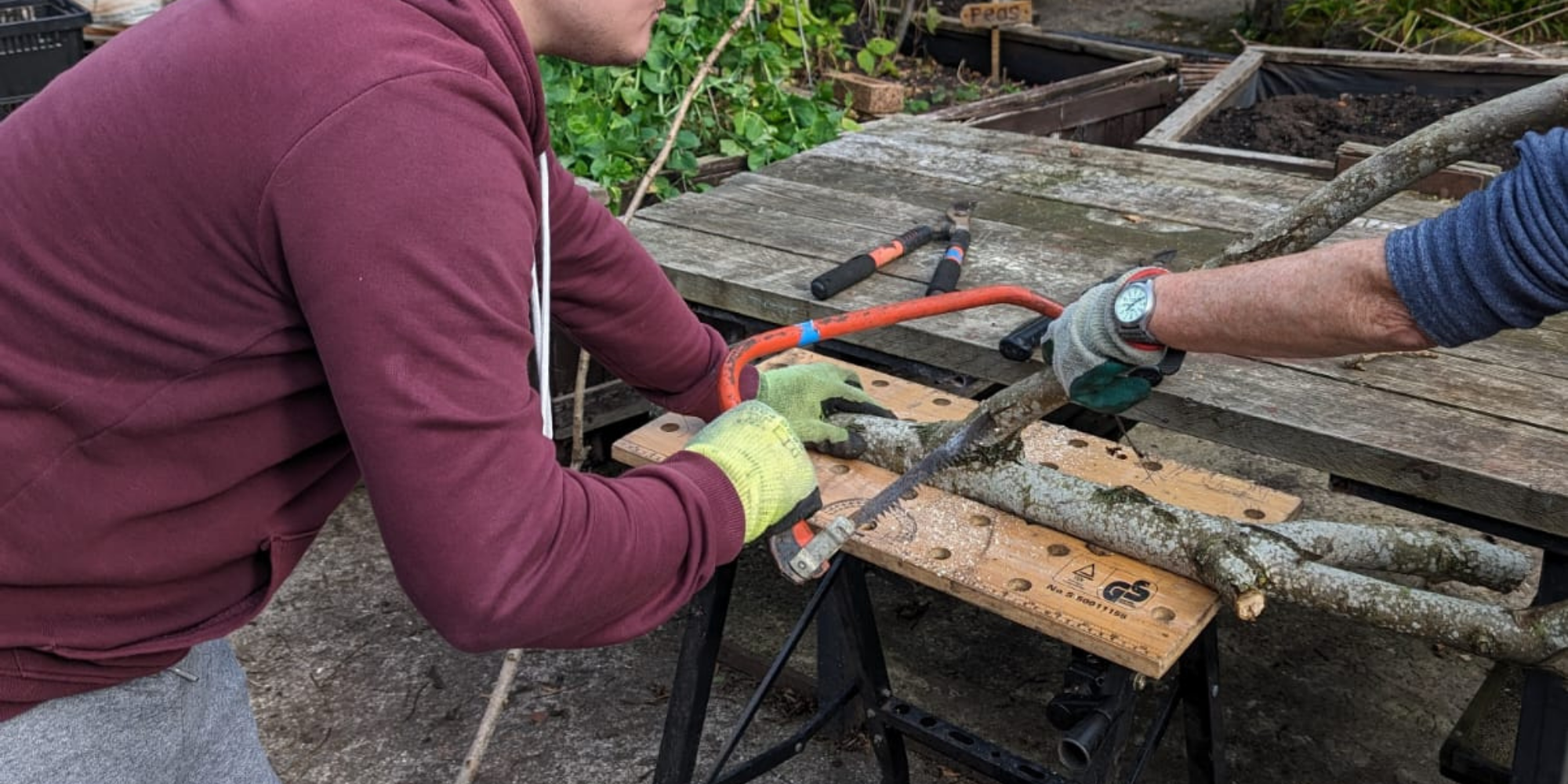
The Employee Experience
The Fair Work principles are central to the overall approach at Edge. Marketing Manager Claire explained ‘‘If staff aren’t happy then they aren’t going to be happy at work. We can’t change the world for everybody, but we can be compassionate, and we can be flexible’. Fair work principles are embedded in staff experience in the following ways:
Security
Edge is proud to be one of only a handful of social care employers in Scotland with Living Hours accreditation, as well as being an accredited real Living Wage employer. Under their new delivery model, David described the process of accreditation as ‘remarkably straightforward’, with Claire noting that the requirements aligned with the way they were operating: ‘In comparison to other things we have had to jump through hoops for – no hoops.’
Effective Voice
Staff take the lead – from activities offered to the young people, down to decisions about colours for branding. Claire explained: ‘On Friday afternoon we have protected sit down conversations– the phones go off, and we sit together to work through any issues’. Ideas are also encouraged through a culture of sharing and reflective practice, online forms, and suggestion boxes.
Edge build in mechanisms for involvement ensuring staff, service users and families can meet and share ideas or concerns. They have recently established their own community council, the Edge Alliance, meeting once a quarter, for this purpose.
Opportunity
Claire explains ‘We invest heavily in our team – we do a lot of training; we support them through their SVQs’.
Edge also offers clear pay banding with routes to progression attached to qualifications and other in-post achievements.
David adds: ‘It’s the same metric for staff that we would apply to the people we support – what is your potential? What do you want to do? What can you achieve? What are you interested in? Let’s help you do that’.
Fulfilment
The culture at Edge means staff feel proud to work there, and systems for involvement mean they feel ownership of the business success, which also results in a positive impact on the programme participants.
Engagement with the families of service users provides valuable feedback on the impact of their work, which is shared and celebrated amongst the staff team.
Respect
Edge is a Disability Confident Employer. Claire says: ‘That’s what we do – we are inclusive.’
All staff have regular supervision. They get access to wellbeing support and employee assistance programmes. Noting the intense nature of the work, Edge has built in mechanisms for debriefing, and a culture of no emails outwith work hours. David explains, ‘They need to be able to leave it here when they leave’.
Edge also value flexibility, making every attempt to accommodate appointments and other requests. The business is run in the understanding that everyone has lives outside of work.
“It’s all of the little things to make their working life more comfortable.”

Challenges for the Social Care Sector
Despite being light on their feet, Edge acknowledges the same pressures and challenges that are experienced across the social care sector.
“The social care environment is so constrained by lack of resource from local and central government.”
Challenges that Edge is currently navigating include:
Recruitment
Staff retention is high due to the attractive offer for staff, however recruitment remains a challenge. David explains:
‘Getting the right people through the door is incredibly difficult because we look for skills that are not necessarily associated with a traditional social care role.’
Edge notes that many people are now looking for remote work, and that recruitment costs are prohibitive to advertising widely. Challenges have also arisen due to negative perceptions of social care, young people being reluctant to work in the sector due to misconceptions of the work, and a lack of awareness of the diversity of roles available.
Always proactive, Edge also supports positive action to increase the desirability of social care careers for young people, and build the workforce. Claire explains:
‘We’re a Developing Young workforce Pledge Partner – we go to all the schools we can and talk to young people about what social care careers can offer. We are working to try and dispel the myths associated with social care roles so use videos of our team supporting our service users during outdoor activities like surfing and paddleboarding – this can be what social care looks like too.’
National Insurance Changes
NI has made the cost of employing staff significantly more expensive, and the increase has meant a higher proportion of income is spent on this, which could otherwise be allocated to training, or resources.
“If we compromised the quality of what we do, we wouldn’t be Edge – but balancing delivering high quality services, innovation and sustainable growth can be such a challenge. You have to fulfil these obligations without compromising others and everything is getting more expensive.”
Edge plans charges and share these with commissioners 6-9 months in advance, however policy changes (for example increases to the employer contribution side of taxation) are often made with inappropriate lead time. David explains:
‘What decisions are we as a business going to have to make, on the back of the government deciding we have to pay extra? We can’t pass these changes on to commissioners when we have already told them what we would charge. It leaves far less room for manoeuvre.’
Eligibility for funded care
Local authority support is only provided to people who meet critical or substantial need criteria, but these appear to be applied inconsistently across areas and even between social workers. This apparent subjectivity makes the system difficult to navigate, especially for people who mask their needs, give socially acceptable answers, or present differently in different situations. As a result, many individuals miss out on support until they reach crisis point. The system rewards those who are more vocal or assertive, creating inequity. Furthermore, local authority systems and entitlements vary widely, so moving to a new area can significantly change the support a person or family receives.
Claire shared: ‘We see the human side of it – families in distress because they aren’t getting the support they need or are entitled to. When you are at the human end of it that can be quite difficult’.
What next?
Edge is at an exciting time, celebrating the company’s ten-year anniversary in Autumn, 2026. Despite challenges, their outlook remains positive and they continue to see the benefits in investing in staff to best support young people.
You can find out more about Edge by visiting their website.